Autonomous AI Desk: Revolutionizing the Modern Workspace
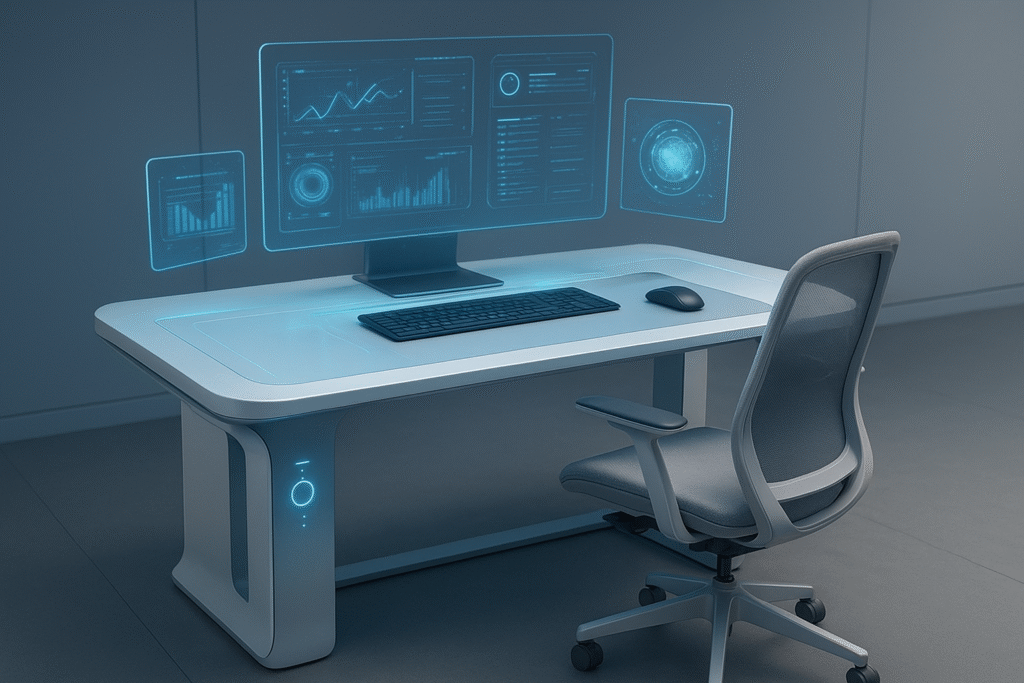
The workplace is undergoing a radical transformation, wherein the autonomous AI desk sits at its epicenter — representing a revolutionary marriage of ergonomic design and AI that is redefining the very concept of work. With remote and hybrid models taking precedence in the modern working world, these smart workstations are increasingly becoming the go-to and necessary tools for productivity, health, and efficiency.
What is an Autonomous AI Desk?
An autonomous AI desk is an intelligent workstation powered by artificial intelligence that automatically optimizes one’s working environment. Unlike traditional standing desks that require manual adjustment, smart desks use sensors and machine learning algorithms to analyze data in real time and adjust to provide a personalized workspace that adapts to your needs throughout the day.
The technology integrates seamlessly with your work patterns, learning your preferences and making proactive adjustments to enhance comfort, productivity, and overall wellbeing. These desks represent the convergence of ergonomic science, IoT connectivity, and machine learning.
Key Features of Autonomous AI Desks
Intelligent Height Adjustment
The key feature of any autonomous AI-powered desk revolves around automatically changing height with regard to multiple factors. Advanced sensors detect that you’ve been sitting for too long and then prompt transitions to standing positions. The AI learns your optimal sitting and standing heights, so no manual calibration is required.
Posture Monitoring and Correction
Integrated cameras and pressure sensors monitor your posture continuously, giving real-time feedback if one tends to slouch or hold unhealthy positions. The system can remind the user to adjust their sitting position or suggest brief stretching breaks to prevent musculoskeletal problems.
Adaptive Scheduling
The AI-powered desk syncs with your digital calendar, understanding your meeting schedule and work intensity. Before a long video conference, it adjusts to your preferred sitting height. During focused work sessions, it may suggest standing to boost alertness and creativity.
Many models have integrated light systems that adjust the color temperature according to the time of day, type of tasks, and amount of natural lighting. Advanced variants can also adjust the workspace temperature or suggest optimal ambient conditions for various activities.
Productivity Analytics
The desks keep track of important metrics, including sit-stand ratios, posture quality, break frequency, and workspace usage patterns. Over time, the AI identifies correlations between your workspace configuration and productivity levels, offering personalized recommendations for improvement.
The Health Benefits
Research suggests that alternating between sitting and standing throughout the day can reduce back pain by up to 32%, decrease blood sugar spikes after meals, and lower the risk of heart disease. Healthy habits become automatic with such desks; the system makes the effort to think for you.
Users have reported less tension in their necks and shoulders, higher energy levels, and better concentration during afternoon hours when fatigue typically sets in. Constant posture monitoring prevents cumulative damage that develops from years of poor ergonomic practices.
Productivity Enhancement by AI
Besides the health benefits of autonomous AI desks, productivity is significantly enhanced. The system eliminates the mental load of remembering to adjust your workspace, allowing you to maintain flow states without interruption. Studies have shown that workers using intelligent desks have fewer distractions and remain focused for much longer periods.
The AI learns when you’re most productive in sitting versus standing positions. For some users, they may be more creative while standing but better at detail-oriented tasks while seated. The desk adapts to support such natural rhythms, optimizing the workspace for each activity.
Because the desk integrates with your productivity software, it can respond to your digital behavior. When you open design software, it may shift to standing height; when you’re writing reports, it may favor your preferred sitting position. In this way, it reduces friction in your workflow through seamless adaptation.
Today, autonomous AI desks play the role of central hubs in smart office ecosystems. They connect with your voice assistant to allow simple voice commands for adjustments. Integration with fitness trackers links holistic health data so the system can provide more informed recommendations.
For corporate environments, enterprise versions can aggregate anonymized data across teams, helping organizations understand workspace utilization patterns and optimize office layouts. This data-driven approach to workspace design represents a significant advancement in facilities management.
Leading Autonomous AI Desk Technologies
A number of companies are pioneering this space with innovative solutions. Smart desk platforms use machine learning to predict optimal adjustment times based on work patterns. Advanced sensor arrays can detect user presence and automatically adjust when you approach or leave your workspace.
Pressure-sensitive surfaces allow for elaborate posture analysis, while some pioneering models include biometric sensors that monitor heart rate and stress levels, automatically adjusting the workspace to keep users calm during stressful periods. Computer vision can identify different users, automatically loading custom profiles in shared workspace environments.
The technology continues to evolve quickly, with features emerging such as gesture controls, augmented reality workspace visualization, and predictive maintenance — each identifying mechanical issues before they cause failures.
Considerations Before Investment
While autonomous AI desks boast impressive advantages, prospective clients need to consider a number of things. Initial investments in high-quality models range from $1,200 to $3,500 — much higher than traditional standing desks. However, over time, this may be offset by the health and productivity advantages of these desks.
Space requirements vary considerably. Ensure you have adequate room for the desk’s full range of motion, including clearance above for standing height and below for sitting position. Some models require dedicated power outlets for motors and electronic components.
Privacy considerations matter, especially for desks with cameras or microphones. Understand what data is collected, how it’s stored, and whether it’s shared with manufacturers. Opt for models with strong privacy protections and local data processing when possible.
Noise during adjustment can be distracting in quiet environments. Where possible, test the motor sound or read reviews about it. Most quality models run almost silently, while budget ones can be a bit loud.
Setting Up Your Autonomous AI Desk
Proper setup maximizes the benefits of your intelligent desk. First, set up accurate height calibration, since it needs to know your correct sitting and standing positions based on ergonomic principles. Your elbows should be at 90-degree angles while typing, and monitors should be at eye level.
Configure notification preferences thoughtfully: while position change prompts are useful, excessive interruptions hurt productivity. Strike a balance that works for your workflow and attention style.
Integrate the desk with your current ecosystem of technology — your calendar, productivity apps, and smart home devices. The more data sources the AI has access to, the more intelligently it can optimize your workspace.
The Future of Autonomous Workspaces
As working from home becomes permanent for many professionals, the autonomous AI desk will transition from a luxury item to a key component of productive home offices. It will be more affordable, more capable, and further integrated into our daily work lives.
From my perspective
The autonomous AI desk represents a complete shift in our approach to workspace design. These intelligent workstations, born from the integration of ergonomic principles with artificial intelligence, address some of the most complex health problems and improve productivity and comfort. They eliminate the friction of manual adjustments, learn individual preferences, and proactively optimize the work environment.
For those who spend a lot of time at their desk, the payoff with an autonomous AI desk is multifaceted: better health outcomes, improved focus, and reduced physical strain. As the technology matures and becomes more widely available, these kinds of intelligent workstations will be part of the standard kit in forward-thinking offices and home workspaces.
The future of work is adaptive, personalized, and intelligent — change is being led by the autonomous AI desk, one adjustment at a time.