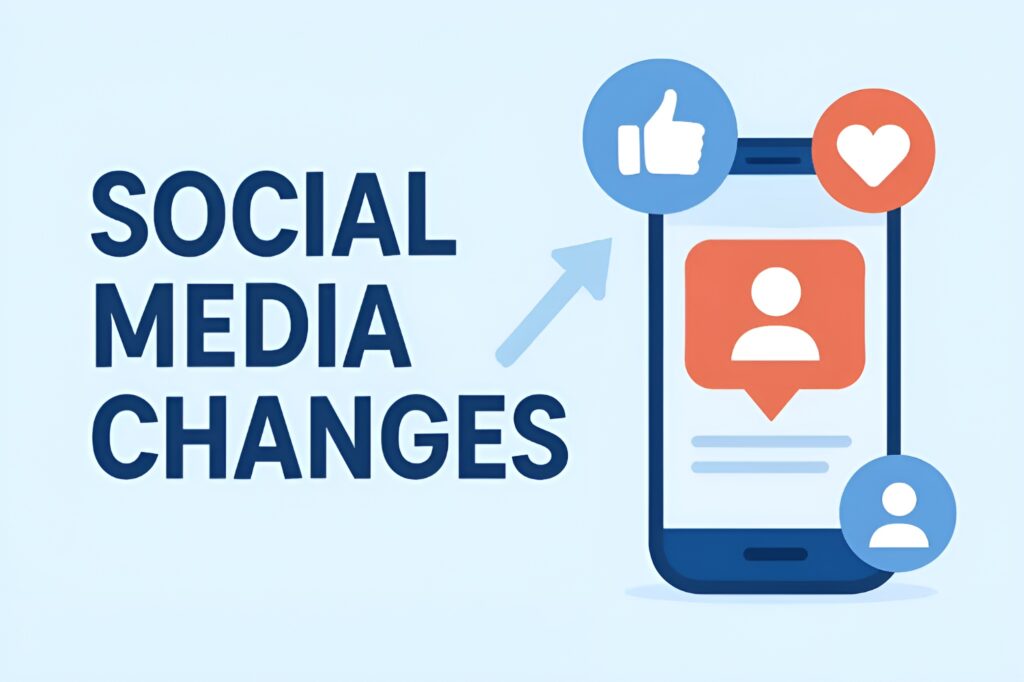
Dude, if your Instagram reach is tanking, or your Facebook page just feels like you’re yelling into a literal black hole? Yeah, you’re not going crazy. Massive social media changes are slamming every platform right now, and they’re seriously messing with how small businesses (and creators, honestly) connect with their people.
But, good news. The thing is, once you actually get what these social media shifts are, you can totally flip your strategy. You can even grow faster than those businesses still doing the same old stuff that doesn’t work. This guide? It breaks down what’s actually different, why that matters to you, and what you need to do, like, today.
Why All These Shifts Matter for Your Business (No Brainer, Really)
Social media platforms? They’re businesses too, obviously (hello, Zuckerberg!). And they’re totally overhauling things to keep us glued to our screens and advertisers paying up. So, these social media changes directly hit whether anyone ever sees your content, how much you have to spend on ads, and what posts even work. Period.
Understanding these social media changes isn’t just “helpful,” it’s absolutely vital if you want to, like, survive. Brands that get it? They’re blowing up. The ones who are ignoring everything? Their engagement is just vanishing into thin air.
The 7 Craziest Social Media Shifts Happening Now
1. Your Feed Is NOT Your Feed Anymore (Thanks, Algorithms!)
What’s going on: Seriously, remember back when Instagram showed you stuff from people you actually followed, in order? Yeah, those days are so gone. This is one of the biggest social media changes: platforms now push content based on what their super-smart algorithms think you want, not what you literally signed up for.
Like, Instagram now fills over half your feed with “Recommended” content from accounts you don’t even follow (ridiculous, right?). TikTok’s entire “For You Page” works that way, and Facebook, YouTube, plus even LinkedIn are all jumping on this train.
Why you should care: Your follower count? It literally matters less than ever. A bakery with just 500 followers can reach 50,000 if their Reel just pops off. Meanwhile, a huge brand with 50,000 followers might only hit 500 if their content is just… meh.
Real-life vibe: This woman, Sarah, has a small candle business with 2,000 Insta followers. She posts this super simple Reel just showing her making candles, used a trending song. And the algorithm—the total matchmaker—showed it to people into home décor and small businesses. She got 180,000 views! And her following was tiny. So, yeah.
What to do:
- Make content that keeps people watching to the very end. Platforms LOVE “completion rate” more than anything else.
- Use trending sounds and hashtags. Those basically whisper to the algorithm about what your content’s all about.
- Get people to save and share your posts. That screams “VALUABLE!” to the algorithms.
- Forget follower counts. Seriously. Just focus on making awesome content that strangers will actually connect with.
2. AI Content Is LITERALLY Everywhere (And Platforms Are So Over It)
What’s going on: You know, ChatGPT, Midjourney, a zillion other AI tools? They’ve made creating social content stupid easy. So now, every platform is drowning in AI-generated posts, pics, videos—and most of it is garbage, honestly.
Why you should care: So, you’re now up against businesses spitting out like ten AI-generated posts a day. But most of it just feels… bland. No soul. No personality. And the platforms? They’re starting to catch on. They might even downrank stuff that’s obviously AI.
Real-life vibe: Okay, two coffee shops in the same town. Shop A uses AI for generic “Monday Motivation” quotes with stock photos, daily. Shop B? They post quick iPhone videos of their baristas making sick latte art, chatting with regulars. Shop B’s engagement? Ten times higher because people actually connect with real humans. Like, come on.
What to do:
- Use AI for ideas or first drafts, sure. But then you have to inject your own unique voice and personality into everything.
- Share behind-the-scenes stuff that AI literally can’t create (your real team, your actual workspace, genuine customer moments).
- Just be authentic, ditch perfection. People can smell generic AI from a mile away.
- If you use AI images, customize them hardcore or just use them for inspiration. Don’t post ’em straight up.
3. Everyone’s Watching, Not Posting (We’re All Lurkers, Basically)
What’s going on: Most people have basically stopped posting regularly. It’s wild. Now everyone’s a “lurker”—just consuming content, barely ever commenting or publicly interacting. And when they do share? It’s in private DMs or group chats, not on their public feeds.
Why you should care: You might actually have killer engagement that you can’t even see! People are screenshotting your stuff, sharing in chats, saving it for later, sending it directly to their friends. So old metrics like likes and comments? They tell an incomplete story. Totally.
Real-life vibe: There was this fitness trainer, right? Her Insta likes were dropping, but her client bookings were actually going up. She checked her Insights and found her “saves” had tripled. People were saving her workout tutorials for later (like doing lunges at home!) and booking sessions because of that content. They just weren’t commenting.
What to do:
- Really pay attention to saves and shares, not just likes. Those are the real value indicators.
- Make content worth private sharing—killer tips, funny bits, even emotional stories.
- Use Story stickers, like question polls, to push for DM responses.
- Start a newsletter or email list. Then you have direct access to your audience away from social platforms.
4. Your Data’s Not Being Tracked Like It Used To (Privacy Changes, Duh)
What’s going on: Apple’s privacy updates, cookies dying off, new regulations—it all means platforms can’t track users nearly as precisely. So when you run ads? You get way less info on who’s seeing them or if they’re even converting. It’s annoying.
Why you should care: This stuff makes ads way more expensive and less targeted. That “magic” of Facebook ads that used to basically read your customers’ minds? It’s, like, breaking down. You need totally different strategies that don’t depend on perfect tracking.
Real-life vibe: A small online boutique used to blast retargeting ads at everyone who visited their site. After the iOS changes, their retargeting audience shrunk by 60%, and they had no clue which ads actually led to sales. So, they pivoted, focusing on an email list and better organic content, building direct relationships. Smart.
What to do:
- Build your email list aggressively. This is YOUR data. You own it. You control it.
- Make super memorable brand content. People will remember you without constant retargeting.
- Use platform tools like Meta’s Conversions API (it’s better, but still kinda fuzzy).
- Test broad audience targeting with fantastic creative, don’t rely on being hyper-specific.
5. Free Reach Is Over (Seriously, Just Pay Up)
What’s going on: Organic reach? It’s been dying for years. But recent social media changes have cranked that up, big time. Facebook business pages usually hit only like 2-5% of their followers naturally. Insta’s pretty much the same. Platforms want you to pay for views. No secret there.
Why you should care: Even your absolute best content probably won’t reach many people if you don’t pay a little. But here’s the catch: paid reach is actually way more accessible than old-school advertising, and you can totally start with tiny budgets.
Real-life vibe: A local restaurant posts about their new menu. Organically, it hit 400 of their 10,000 followers. Weak. They spent $20 to boost the post to local foodies, and it reached 8,000 people. Then 50 new customers showed up that weekend. Total ROI.
What to do:
- Stash away a tiny budget ($50-100 a month) just to boost your best organic posts.
- Test stuff organically first, then put ad money behind what’s already working well.
- If you’re local, focus on local targeting. It’s cheaper and works better.
- Don’t boost everything. Only promote stuff that’s already getting good engagement or has clear business value.
6. Video Is EVERYTHING (Short Form Is King, DUDE)
What’s going on: Okay, arguably the most obvious social media changes: short-form video (under 90 seconds) is basically running every platform. Insta Reels, YouTube Shorts, TikTok, even LinkedIn. They’re all pushing video content big time over static posts.
Why you should care: If you’re not making video content, you’re pretty much invisible. Algorithms give video like 5-10x more reach than simple images or text. This isn’t just some passing trend; this is just how it is now. Seriously.
Real-life vibe: A bookkeeper who only posted text tips on LinkedIn decided to make simple 30-second videos explaining tax deductions using just her phone. Her reach went from 200 views to 5,000-20,000 PER VIDEO. She booked three new clients in the first month. Simple. Effective.
What to do:
- Just start with your phone. You don’t need fancy gear or crazy editing skills. Literally.
- Hook people in the first three seconds: movement, a question, something unexpected.
- Keep videos short—30-60 seconds is perfect. Nail one thing well instead of cramming everything in.
- SHOW YOUR FACE. People connect with humans, not logos. Come on.
- Use trending sounds on Insta and TikTok; the algorithm totally favors popular audio.
7. Communities Are Replacing Feeds (Hello, Groups & Niche Spaces!)
What’s going on: Platforms are restructuring themselves around communities, not just public feeds. Facebook Groups, LinkedIn newsletters (who knew?), Discord servers, Reddit—they’re all growing while traditional feed engagement is just dying off.
Why you should care: People crave actual connection and conversation, not just consuming content. So building (or joining) communities totally creates way stronger customer relationships than just broadcasting to a generic feed.
Real-life vibe: A local plant shop owner started a free Facebook Group called “Plant Parents of [City Name]” where members share tips and plant photos. The group has 2,000 active members who constantly buy from her, go to workshops, refer friends. That’s worth way more than her 5,000 dormant Insta followers.
What to do:
- Join communities where your customers already hang out. Participate genuinely, don’t just spam.
- Maybe start a simple Facebook Group or Discord for your most loyal customers.
- Share exclusive content or early access stuff in your community to reward participation.
- Help members connect with each other. Don’t just make it about you and your business.
So, How Do You Even Deal? Here’s A Super Simple Plan.
Look, all these social media changes can feel like a total nightmare. But you don’t need to be a guru immediately. Here’s a practical, chill way to approach it:
Week 1: Figure Out What’s Working (Or Not)
- Check your insights. Which posts actually got saves, shares, comments last month?
- Find the patterns. Are videos doing better than photos? Are behind-the-scenes posts outperforming promotional ones?
- Spy on competitors who are crushing it. What are they doing differently?
Week 2: Just Start Making Video Content
- Record like five simple videos on your phone. Answer common customer questions.
- Post them as Reels on Instagram or Shorts on YouTube.
- Do NOT worry about them being perfect. Just start. You’ll get better, I promise.
Week 3: Build Your Own Stuff (Owned Channels)
- If you don’t have one, set up an email list (Mailchimp, ConvertKit, whatever’s free/easy).
- Put a signup form on your website and social bios.
- Think about starting a basic Facebook Group or some other community space.
Week 4: Try a Little Paid Promo
- Grab your single best-performing post from last month and boost it with, like, $10-20.
- Target people in your local area who are into stuff related to your business.
- See what happens, then adjust. That’s it.
Ongoing Forever:
- Post 3-5 times a week, focusing on video.
- Engage for real with other people’s stuff in your niche.
- Check your metrics monthly and, you know, do more of what’s working.
Seriously, Don’t Mess Up These Obvious Things.
While you’re trying to figure out all these social media changes, do NOT make these dumb mistakes:
Posting the EXACT Same Thing Everywhere: Each platform’s different! A LinkedIn article is NOT a TikTok video. Stop it.
Ignoring Your Analytics (Duh): Your insights literally tell you what your audience wants! If Reels get 10x the reach, make more Reels!
Only Posting Ads, Basically: Those promo posts are even less effective now. Stick to the 80/20 rule: 80% helpful/fun, 20% actually selling something.
Buying Followers or Engagement (Seriously?): Fake stuff actually hurts your reach. Algorithms will spot it and kick your content down.
Giving Up Too Quickly: Changing things takes time to build momentum. Consistency over a few months matters way more than trying to go viral once.
The Gist About Social Media Changes (Listen Up!)
Social media is basically a mad dash right now, but that’s actually cool for small businesses who are willing to pivot. Big brands? They’re usually way too slow. You can be agile.
Here are the key social media changes to totally remember:
- Algorithms love engagement way more than follower count now.
- Video (especially short stuff) gets ridiculously more reach.
- Authenticity totally crushes generic AI garbage.
- Building communities gives you way stronger relationships than just shouting into a feed.
- Owned channels (like email lists, groups) protect you from flaky algorithms.
- Even tiny ad budgets can totally boost your best content.
You don’t need a massive budget or some huge marketing team to win with these social media changes. You just gotta get what’s happening, make stuff that real people connect with, and actually show up consistently with genuine vibes.
Start with ONE platform, master ONE type of content (video’s your best bet, truly), and just build from there. The businesses that are absolutely killing it in 2025? They’re not the ones with the most cash. They’re the ones who were quick to adapt to these social media changes and focused on real connections over, like, fake follower numbers.
And these social media changes? They’re not going anywhere. But hey, now you know exactly what to do.